“I have no need to think, if only I can pay; others will take care of that disagreeable business for me.”
Immanuel Kant, What Is Enlightenment? (1784)
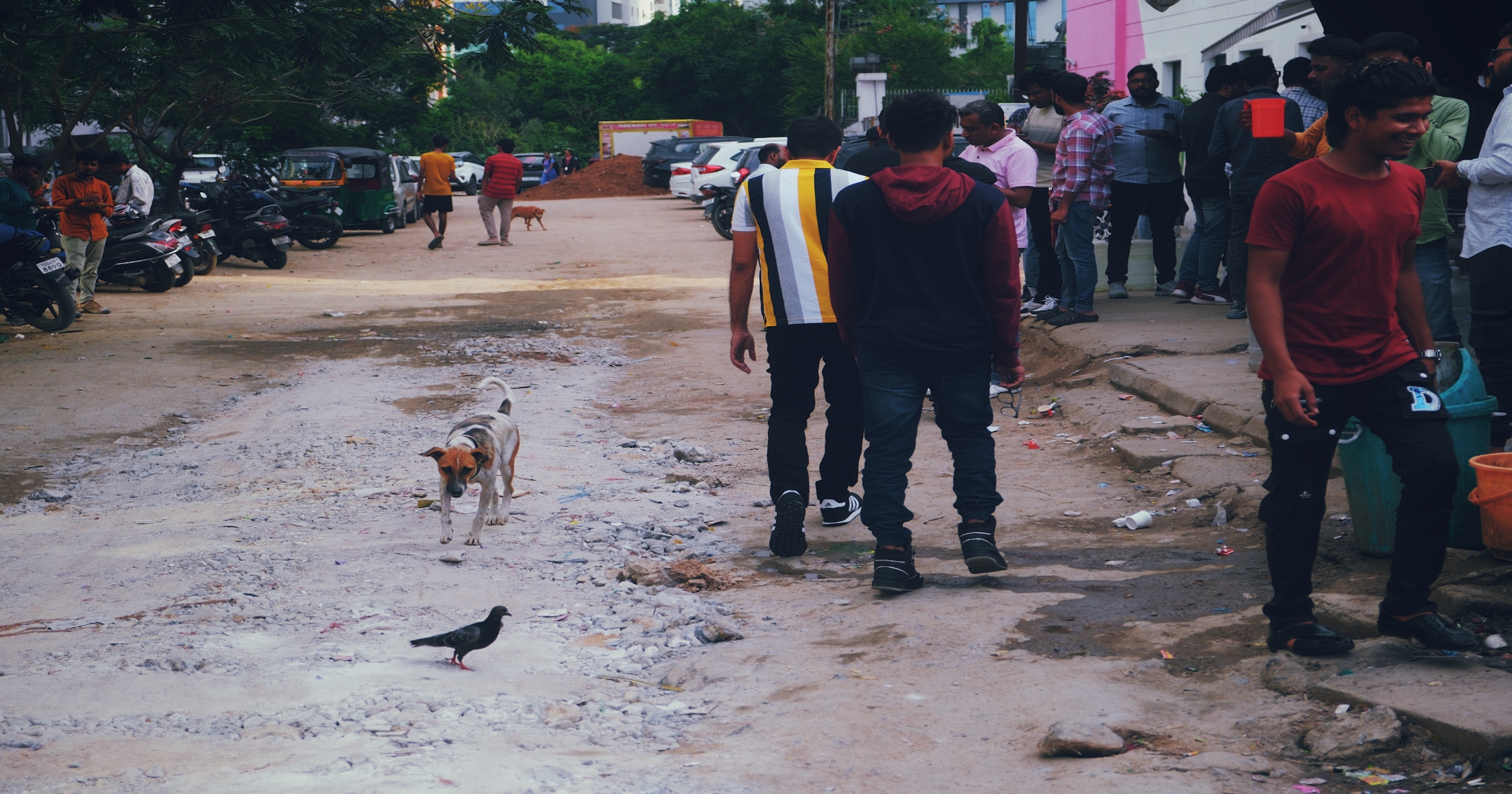
I was riding a scooter around an island somewhere in the south of the Philippines. The air quality was shit. Motorbikes were overtaking wherever they could find a gap, helmets seemed optional, and whatever road laws existed were being treated more as suggestions than requirements. Along the side of the road people were selling meat, fish, fruit and cooked food from little stalls that would probably give an Australian health inspector heart palpitations. Dogs wandered in and out of the traffic, kids played close to the road and people somehow got on with their lives.
Outside, it felt as though I was inhaling a pack of Winnie Blues while scooting to the gym. It was somewhere in the middle of those fumes that the word sterile popped into my head. Australia, by comparison, is extraordinarily sterile. I do not mean that in a negative sense. The water is safe and sometimes contains fluoride. You can even drink it directly from a tap. Food is inspected and meets certain standards. Roads have rules that are very well policed, buildings meet strict standards, and workplaces have regulations that supposedly ensure they are safe. Wherever something can hurt us, contaminate us, fall on us, poison us or even shame us, there is probably a rule, policy or regulation attempting to prevent it.
Keeping the world sterile seems like a sensible thing to do. As I breathed in toxic fumes from nearby fires, however, I started wondering what happens when we become accustomed to having so many decisions made for us. If someone has already assessed the risk, written the instructions and decided what we are allowed to do, how much judgement do we need to exercise ourselves? All that is necessary is to follow the rules and everything should be all right. If something goes wrong, presumably someone else has failed to do their job. Somewhere between appreciating the benefits of a sterile world and wondering who was responsible for it, I found myself asking whether living in one might encourage a sterile mind.
By a sterile mind, I mean a mind that has become better at following instructions than working things out. It may be perfectly intelligent. It may know every rule and be very good at pointing out when somebody else has broken one. But faced with a situation the instructions do not quite cover, it waits for someone to explain what happens next. That is the possibility that bothers me. We want people to be capable and responsible, yet I wonder whether we sometimes organise life in ways that give them less practice at being either.
Now, life in a highly regulated society is not entirely free of risk. The risks we are allowed to choose are a curious assortment. Back home in Western Australia, I can choose to smoke, provided I obey the restrictions on where I do it. I can choose to go surfing and decide whether the conditions are beyond me. But ride a bicycle down the road without a helmet and I can be fined. With cigarettes, the government strongly discourages my decision while collecting tax on it. I can see why these activities are treated differently, and this is hardly an argument for taking up smoking or discarding a helmet. It does make me wonder, though, how we decide when an adult can weigh up a risk and when that decision must be made for them.
Now, I am a pretty risk averse person. I am guided by principles that involve respecting others and their property and taking responsibility for my health and wellbeing. I think that most people mean well and try to regulate their own behaviour. There are, of course, a few who do not. The responsibility for dealing with them has been handed to the government, which takes on the role of the community. Not surprisingly, the role and purpose of communities are diminishing. This is, however, a digression.
Being protected from risk can also bring a different kind of anxiety. There is the worry that something might go wrong, and then there is the worry that we might have broken a rule, even when we think we are being sensible. If working out what is permitted becomes more complicated than working out what is safe, our attention can shift towards staying out of trouble. We may become very careful about complying without becoming any better at judging the situation. I wonder how often the question in our heads changes from whether something is a good idea to whether we are allowed to do it.
Learning to make decisions and take responsibility for our actions is part of becoming an adult. Most people enjoy a challenge; however, learning comes with risk. There is something valuable in being trusted to attempt a challenge, judge your own limits and accept responsibility for the result. The difficulty is that a real opportunity to take responsibility includes the possibility of getting something wrong. If every awkward moment or manageable risk becomes a reason to stop the experience, I am not sure where the judgement we expect from adults is supposed to come from.
Travelling between more regulated and less regulated places makes me notice how differently I behave in each. I am lucky enough to spend time in both, and I often feel more alert and more alive where things are less predictable. I have to pay attention, make decisions and adjust when my first assumption turns out to be wrong. That can be stressful, but it can also be satisfying. Back somewhere orderly, I can become bored and oddly restless even while appreciating how well everything works. Perhaps that says more about my personality than either society. Still, there is something liberating about having to use my judgement and being left to get on with it. Maybe the essence of being human is dealing with some degree of risk in our daily lives. Yeah, I know crossing Canning Highway can be risky, but it’s not that much of a challenge. Riding a scooter is a challenge, and I am well aware of the risks, yet I do it.
A set of failed traffic lights captures some of what I mean. I have seen drivers slow down, look at one another, hesitate, wave someone through and gradually work out how everyone is going to get across. The road rules have not disappeared, and a broken intersection can certainly be dangerous. What interests me is the change in attention. People who might normally be watching for a green light are now watching one another. For a moment, getting through depends on reading the situation and cooperating with the other people in it. There can be something surprisingly courteous about the whole affair.
When the lights are working, a few seconds of hesitation can produce quite a different response. Someone fails to move promptly enough and the driver behind is on the horn, apparently facing the collapse of civilisation. I find that contrast interesting. When everyone knows the situation is uncertain, there can be more willingness to make allowances. When we expect everything to work, another person’s hesitation becomes an offence against the proper running of our day. Perhaps a very orderly world can leave us less practised at adapting when order briefly fails. The problem is then both the delay and our conviction that we should never have had to deal with it.
Of course, common sense is not equally reliable in all of us, which is one fairly obvious reason for having rules. My sensible decision may look reckless to the person who has to avoid me, rescue me or repair the damage afterwards. The scooter ride offered plenty of reminders that one person’s freedom can become another person’s problem. Nor does my feeling more alive in a less predictable place prove that its residents would not welcome safer roads and cleaner air. I get to enjoy the novelty and then go home, an important reality to remember before announcing that everyone else would benefit from a little more chaos.
What I keep coming back to is how much room a safe society leaves for people to develop and use their own judgement. A rule can help us understand a danger, and following it can be a considered decision. The trouble comes when obedience is equated with responsibility, as though doing what we were told removes the need to notice what is happening around us. Even a very good set of instructions cannot anticipate every situation. At some point, somebody still has to look up, think and decide what makes sense. I would like to believe we are giving people enough opportunities to become good at that in case something important depends on it.
The thought of having a sterile mind frightens me more than the occasional inconvenience of having to think for myself. Sterility in other departments worries me less at my age. I like knowing that I can weigh something up, cope when the plan changes and take responsibility for a decision without first looking for someone to approve it. Does a sterile world make that less likely? I cannot settle that from thoughts conjured up on the seat of a scooter, but I suspect it can if being a good citizen comes to mean doing as instructed and leaving the judgement to someone else. I would happily take cleaner air and more predictable traffic. I would also like to think there is still some use for the person holding the handlebars.
So, I opt for sterility to some degree, but I ponder the risks it poses to free thinking, just as I ponder the risks of AI.