
“I have no need to think, if only I can pay; others will take care of that disagreeable business for me.”
Immanuel Kant, What Is Enlightenment? (1784)
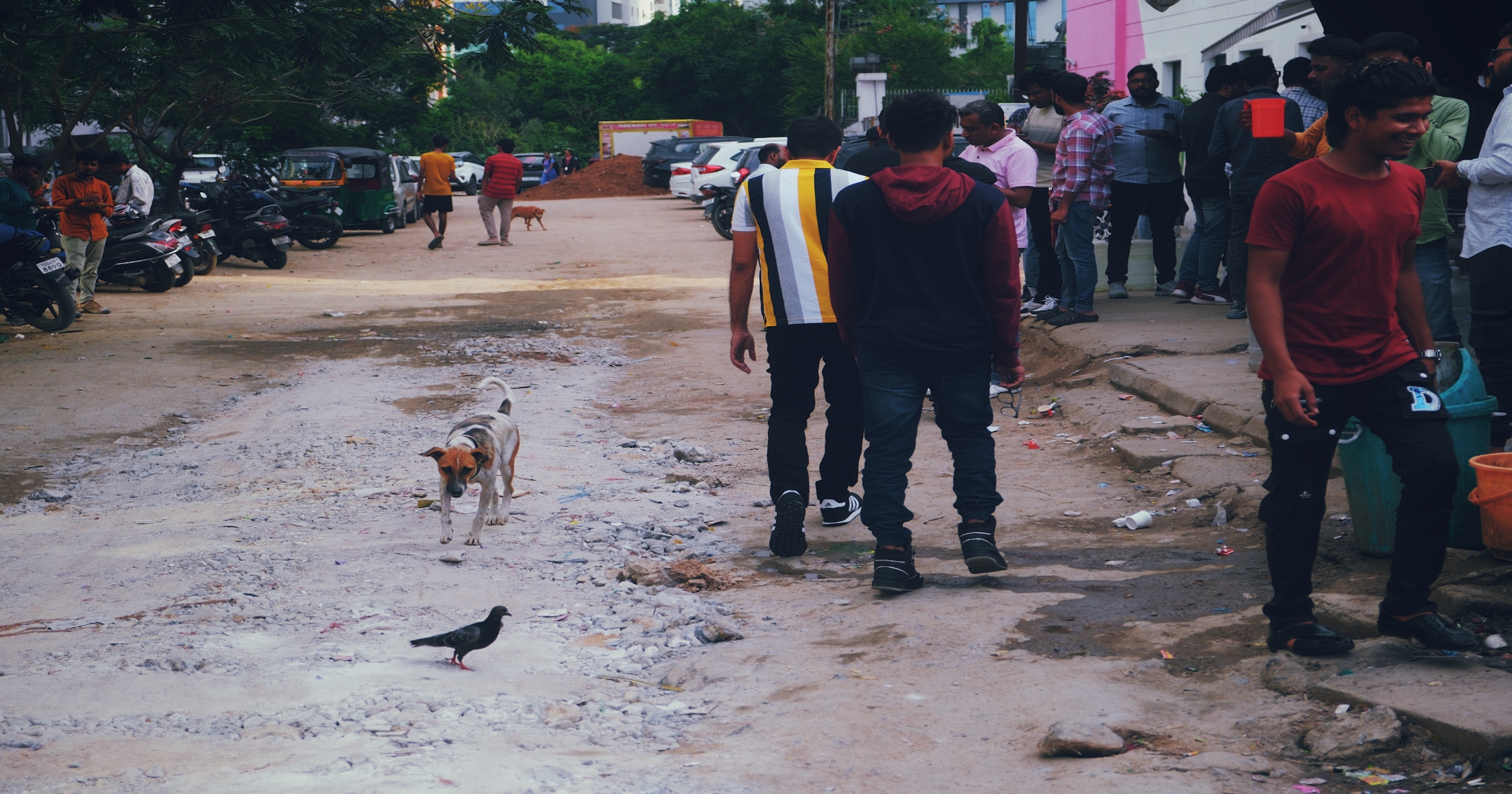
I was riding a scooter around an island in the Philippines when I started thinking about sterility. The air quality was shit. Motorbikes were overtaking wherever they could find a gap, plenty of riders weren’t wearing helmets, and the road rules appeared to be receiving varying degrees of attention. Along the roadside, people were selling meat, fish, fruit and cooked food from little stalls. Dogs wandered into the traffic, children played near the road and everyone somehow got on with their lives.
I was on my way to the gym, although breathing in what felt like a packet of Winnie Blues seemed an unusual way to prepare for exercise. Somewhere between the exhaust fumes and smoke from nearby fires, I found myself thinking about how different this was from Australia. Back home, I can turn on the tap knowing that the public water supply is disinfected and closely monitored. Food businesses have mandatory safety standards they are required to meet. There are systems doing things on my behalf, so I rarely need to think about them or make judgements myself. Big Brother has my back.
Sterile was the word that came to mind. Now, I realise that clean water and predictable traffic aren’t the same thing as having every decision made for you, and I certainly don’t wish for more pollution in Australia. What interested me was the idea that someone else had made the world safer for me. In a way, I’ve become accustomed to someone else assessing many of the risks and deciding what I’m allowed to do. How much practice do I get at making those judgements myself? No wonder Westerners are cautioned about riding scooters in Southeast Asia. It requires a completely different way of thinking about navigating traffic.
Being responsible or following instructions?
Is there a risk that a sterile environment can result in a sterile mind? By a sterile mind, I mean a mind that has become better at following instructions than working things out. It might be perfectly intelligent, know every rule and be particularly good at identifying when someone else has broken one. But faced with a situation the instructions don’t quite cover, it waits for someone to explain what happens next. That’s the possibility that bothers me, rather than the existence of rules.
I think there’s a distinction between regulating my own behaviour and behaving because someone else is regulating it. I might slow down because I’ve noticed a child near the road or because I’m worried about being caught speeding. The immediate result could be the same, but the attention behind it is different. In one case I’m responding to what’s happening around me; in the other, I’m responding to the possibility of a penalty.
Research into human motivation makes a related distinction. Psychologists Richard Ryan and Edward Deci describe how people can act because of external pressure or because they have understood and accepted the reasons for an action. Their work suggests that people are more likely to internalise a value when they have some opportunity to understand, process and endorse it, rather than simply responding to external pressure. That isn’t evidence that a highly regulated country produces people who can’t think. It does, however, help explain why compliance and personal commitment aren’t quite the same thing.
What I wonder about is whether I sometimes mistake one for the other. If I’ve followed all the instructions, it can feel as though I’ve fulfilled my responsibility. Anything that goes wrong must presumably be a problem with the instructions, the system or the person who wrote them. But there are situations in which doing what I was told still leaves me with a responsibility to notice that something isn’t right.
The risks we get to choose
The risks left to individual choice are an interesting assortment. In Western Australia, an adult can choose to smoke, although there are extensive restrictions on where smoking is permitted. Riding a bicycle on a road or path is different: an approved helmet must generally be worn and securely fastened, subject to specified exemptions. These activities sit within different rules, leaving different amounts of room for an individual decision.
I’m not presenting that comparison as proof that either approach is wrong. The risks are different, and a decision that looks personal can have consequences for other people. What interests me is the boundary between being given information with which to make a decision and having the decision settled in advance. How do we decide where that boundary belongs, and what do we expect people to have learnt about responsibility on either side of it?
Despite riding a scooter, I’m a fairly risk averse person. I try to look after my health, respect other people and avoid creating problems that someone else will have to sort out. I don’t want to live somewhere that depends entirely on everyone sharing my version of common sense. I’ve encountered enough other people’s common sense to know that this could be an ambitious arrangement.
Even so, I notice a particular kind of uneasiness when I’m more concerned about whether I’ve broken a rule than whether I’ve done something unsafe or inconsiderate. The two questions can overlap, but they aren’t identical. I can spend so much effort establishing what’s permitted that I give less attention to what’s actually happening. At that point, staying out of trouble starts to feel like the purpose of the exercise.
Somewhere to practise judgement
My years in education make this difficult to separate from the question of how people learn. I wouldn’t expect someone to become good at making decisions if every meaningful decision were made for them. At some point, they need to weigh up options, attempt something and discover whether their judgement was any good. The uncomfortable part is that a genuine opportunity to decide includes the possibility of getting it wrong.
That doesn’t mean removing guidance and waiting to see who survives. Research on teaching distinguishes between providing structure and exerting control. Clear expectations, consistent guidance and useful feedback can coexist with opportunities for students to make choices and take initiative. Ryan and Deci’s review of research in education found that combining autonomy support with structure was associated with stronger autonomous motivation, greater use of self regulated learning strategies and lower anxiety. Independence and boundaries aren’t necessarily opponents.
That seems relevant beyond the classroom, although it doesn’t settle my question about whole societies. I don’t expect people to cope with dangers they aren’t equipped to handle. But we also need opportunities to try things, make decisions and learn from mistakes, with guidance when we need it. If the possibility of getting something wrong is always a reason to stop us, how are we supposed to develop good judgement?
I also wonder what I’m learning when a difficulty is removed before I’ve had a chance to deal with it. Sometimes I’m being spared a danger I couldn’t reasonably assess, which is a benefit I’m happy to accept. At other times, perhaps I’m being spared an awkward conversation, a failed attempt or the inconvenience of finding another way. Those aren’t all the same experience, even if they can all be described as something going wrong.
When the traffic lights stop working
A set of failed traffic lights captures some of what I mean. I’ve watched drivers slow down, look at one another, hesitate and gradually work out how everyone is going to get across. The road rules haven’t disappeared because the lights have stopped working. In Western Australia, the Road Traffic Code specifically sets out how drivers must give way when traffic signals aren’t operating. But the situation still requires a different sort of attention from simply waiting for a signal to change.
What interests me is that people start watching one another more closely. There’s sometimes a little patience, a gesture of acknowledgement or a willingness to allow someone time to work out what they’re doing. I’m not claiming that a broken intersection is safer, or that everyone suddenly becomes considerate. I’ve simply noticed moments when uncertainty appears to make people more attentive to the other humans involved.
Compare that with the reaction when the lights are working and someone takes a moment too long to move. I’ve heard horns sounded with an urgency that suggests the driver behind is facing the collapse of civilisation rather than a delay of three seconds. The contrast makes me wonder whether an expectation of order can sometimes make another person’s hesitation harder to tolerate. When we all know something has gone wrong, perhaps we’re more prepared to make allowances.
There’s a question about self regulation in that reaction too. It isn’t only about working out when to enter an intersection. It’s also about managing my impatience when the person in front doesn’t behave as I expect. I might understand every road rule and still need to do some work on the person operating the horn.
Feeling alive isn’t the same as being safe
Travelling between places makes me notice changes in my own behaviour. Where things are less predictable, I often feel more alert and more involved in what I’m doing. I have to watch, make decisions and adjust when my first assumption turns out to be wrong. That can be stressful, but there’s also something satisfying about dealing with a situation rather than simply proceeding through it.
Back somewhere orderly, I sometimes become bored and restless while simultaneously appreciating how well everything works. Perhaps that says more about me than either place. I may enjoy novelty or the feeling of competence that comes from navigating something unfamiliar. Neither would establish that uncertainty is good for everyone, or that people need a daily encounter with unpredictable traffic to remain mentally engaged.
The scooter is a useful reminder of how easily I can confuse enjoying a risk with having assessed it well. I know there are risks, and I ride anyway, but awareness doesn’t make me immune to a poor decision. Nor would every consequence necessarily be mine alone. Someone else might have to avoid me, help me or deal with what happened afterwards.
I also have the privilege of being able to leave. I can enjoy the sense of freedom, complain about the fumes and eventually return to Australia. Others don’t necessarily have the same choice. My feeling more alive tells me something about my experience; it tells me nothing about whether others would prefer cleaner air, safer roads or less uncertainty in their daily lives.
Leaving room for the person
I keep coming back to the distinction between being protected and becoming passive. I don’t need to assess the water treatment system every time I fill the kettle, and I’m pleased that I don’t. Trusting someone else’s expertise isn’t a failure to think for myself. The question is whether I recognise where that trust ends and my own attention still matters.
A rule can be part of my judgement rather than a substitute for it. I can understand its purpose, take it seriously and still pay attention to the circumstances in front of me. Equally, deciding that a rule doesn’t suit me isn’t automatically an act of independent thought. Sometimes it may simply be an elaborate explanation for wanting my own way.
I find myself asking a similar question about AI. Am I using it to help me examine an idea, notice something I’ve missed and think more clearly? Or am I accepting what comes back because it saves me the effort of working things out? The presence of assistance doesn’t answer that question. I still have to consider what part I’m playing.
The thought of having a sterile mind worries me rather more than sterility in other departments at my age. I like feeling that I can weigh something up, cope when a plan changes and take responsibility without first looking for someone to approve the decision. I don’t know whether a more regulated society makes that harder, and I’m unlikely to settle it from thoughts conjured up on the seat of a scooter. But I do wonder whether we give as much attention to developing judgement as we give to checking compliance.
I would happily take cleaner air and more predictable traffic on the way to the gym. I don’t need smoke in my lungs to prove that I’m capable of thinking for myself, and I’d prefer the dogs to remain beside the road rather than in it. What I’m reluctant to give up is the expectation that, even when the systems are working, I still have a part to play. There ought to be some use for the person holding the handlebars.