I came across an article in Yahoo Lifestyle recently about the best places in the world to retire. It referred to a poll of more than 2,000 readers, with 63 per cent saying they would like to retire overseas. That doesn’t mean 63 per cent of Australians are preparing to leave. The people who choose to answer a reader poll aren’t necessarily representative of everyone else, and liking the idea isn’t the same as booking a flight. Even so, the number caught my attention.
I thought Australia was the lucky country. Why would so many of those readers be interested in spending their retirement somewhere else? Perhaps it’s the cost of living, the prospect of making their savings last longer or simply wanting a change. I don’t know their reasons, but I understand the attraction. Being grateful for the country you live in doesn’t necessarily mean you want to spend the rest of your life there.
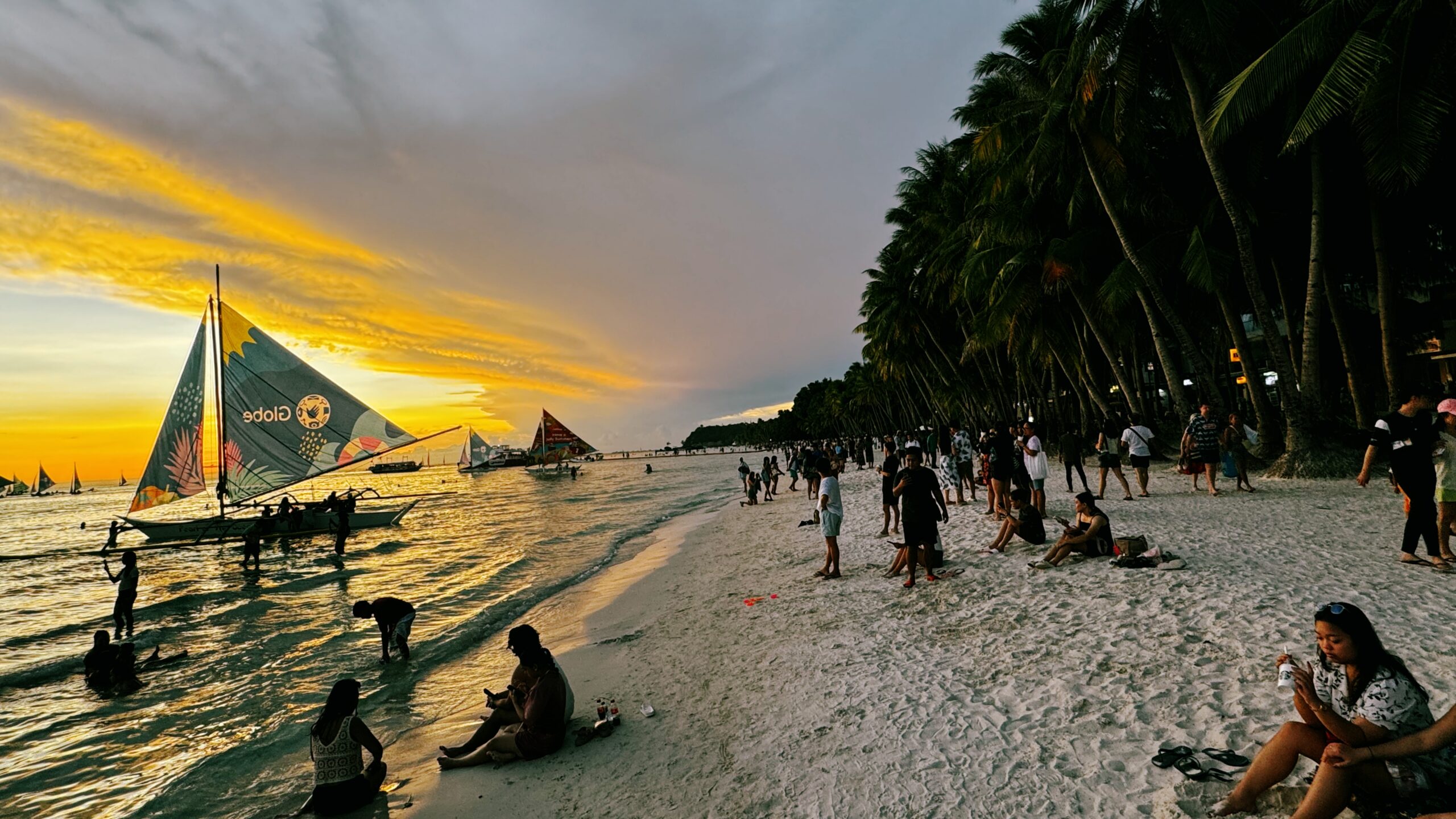
I seem to have arrived at my own version of this without making a formal decision. I haven’t completely retired, and I haven’t permanently moved overseas. Instead, I spend part of my time in Australia and part of it in the Philippines. Australia remains my base, but at the moment I enjoy having another place to live for part of the year, and I’m not particularly interested in deciding which one has to win.
How I ended up with two places
My route into this arrangement probably differs from that of someone who finishes work and decides to try living overseas for the first time. I spent many years working internationally in education and development, particularly in the Pacific, often on Australian funded programs. Living elsewhere became familiar, and I gradually stopped assuming that life had to be organised around being in Australia. When work began occupying less of my time, spending longer periods overseas didn’t feel like an enormous leap.
There are plenty of Australians doing some version of living abroad. Services Australia estimates that around one million Australians are living and working overseas at any given time. That includes people at different stages of life, not just retirees, so it doesn’t tell us how many have exchanged work for a place beside the sea. But it does put my own arrangement into perspective. Having a life outside Australia is hardly an unusual Australian experience.
I began with relatively short stays, booking Airbnbs and moving between places. Gradually the stays became longer, and I found myself returning to the same part of the Philippines rather than always looking for somewhere new. Eventually I found a place that suited me and arranged to stay longer. There wasn’t a particular morning when I announced that I was establishing a second home. I just kept coming back.
That gradual approach turns out to be fairly sensible. Smartraveller suggests trying a temporary move of six to twelve months before committing to a longer move, partly to find out whether the practicalities of living somewhere actually suit you. A holiday can tell you whether you like the beach. Staying longer gives you a chance to find out whether you like the life around it, including all the less interesting parts that don’t appear in the photographs.
An ordinary life on an island in the Philippines
What I enjoy here is surprisingly ordinary. I go to the gym, have coffee, do some work and sometimes head to the beach for a swim. I ride around on a scooter, which costs very little to run and which I probably enjoy more than good sense would recommend. I take photographs, occasionally go somewhere for a meal, read a lot and spend quite a bit of time sitting outside with a cup of tea. I have about one beer a week. It wouldn’t make a particularly gripping travel documentary, but I’m enjoying living it.
I still enjoy visiting new places, but I don’t want to spend the next part of my life constantly travelling from one destination to another. Some of the travellers I follow online love that constant movement, and good luck to them. What suits me more now is staying somewhere for a while, settling into a routine, recognising a few faces and getting to know what ordinary life there actually feels like.
I’d still like to make videos, although I don’t want a channel that requires me to keep changing countries to have something to say. I’m not especially interested in competing with a younger traveller carrying a camera up a mountain. I’d rather draw on things I’ve experienced or thought about, alongside my interests in music, photography and writing. Staying somewhere for a while gives me the space to do that, and being able to put my feet up somewhere familiar afterwards is part of the attraction.
Of course, one reason this kind of life is possible is the cost of living. In InterNations’ 2025 survey of more than 10,000 people living abroad, the Philippines ranked seventh out of 46 destinations for how positively expatriates rated their financial situation. This included the cost of living, satisfaction with their finances and whether their disposable income was enough to live comfortably. It wasn’t a survey specifically of retirees, but the finding reflects my own experience. I can afford everyday things such as coffee, eating out and getting around without thinking quite so hard about what each one costs.
Still, I wouldn’t choose somewhere simply because it was inexpensive. What matters is whether I enjoy getting up and going about my day there. The coffee, the swimming, the occasional conversation and the freedom to go somewhere for lunch are part of that. I’m not trying to find the cheapest place to grow old. I’m trying to find a way of living that suits me now.
The privilege of keeping Australia as my home
There’s a fair amount of privilege behind this arrangement, and I think it’s worth being honest about that. I’ve had steady employment, accumulated savings and managed to buy a house in Australia. Those things give me choices that many people don’t have. It would be rather convenient to announce that I’ve discovered the secret to a simpler life while overlooking the financial security that makes it possible.
Australia has been central to that security. I came to Australia when my mother remarried an Australian, completed my university studies and went on to build a career and raise two children. I value my Australian citizenship enormously. I didn’t have to fight for it in the way some people have, but I recognise what it has meant for my life, and it isn’t something I would willingly give up.
That’s part of the contradiction in all this. I enjoy spending time outside Australia while continuing to benefit from the life I built there. I’m not abandoning one way of living for another. I’m keeping my Australian base while exploring how much of my time I want to spend elsewhere. Perhaps being able to make that choice is one of the ways I’ve been lucky.
Keeping that choice available does cost money, though. My house still needs maintaining, and the rates and insurance don’t stop because I’m away. The car sits in the garage for months while continuing to cost money, and I keep paying my Australian private health insurance. Living less expensively in the Philippines doesn’t cancel those bills. There’s something faintly absurd about paying for two lives when I can only physically occupy one of them at a time.
There’s also administration that doesn’t fit neatly into the picture of a relaxed life overseas. Services Australia has specific guidance for people splitting retirement between Australia and another country. If you’re already dividing your time between countries and later claim the Age Pension, where you primarily live can affect whether you are eligible to claim from there, alongside the other qualification requirements. I’m not writing a guide to anyone else’s entitlements, but it’s a reminder that keeping a house in Australia doesn’t settle every question about living between countries.
When a tooth becomes an international problem
A dental problem recently brought the practical side of this arrangement into focus. I thought I might have an infection around a crown, and for a while I was trying to establish what treatment might be needed. Could it be done where I was staying? Would I need to go somewhere larger, or fly back to Australia to see my dentist? A fairly small part of my anatomy had suddenly become involved in international travel planning.
It didn’t turn out to be the infection I feared, but the uncertainty caused some stress. The issue wasn’t whether good dentistry exists somewhere in the Philippines. It was whether I could access the particular treatment I might need from the place where I was actually living. Those are different questions, and the distinction matters rather more when something starts hurting.
Medicare doesn’t pay for medical treatment overseas, and Australian private health funds don’t cover overseas treatment either. Smartraveller advises people considering retirement overseas to investigate the local healthcare system and think about international health insurance, including what might happen if they became seriously unwell or needed care that wasn’t available locally. That’s less appealing than researching a beach, but it’s part of the same decision about where to live.
I don’t want to organise the rest of my life around the possibility of becoming unwell. That seems a fairly miserable way to spend years when I can still get out and enjoy myself. Equally, I know my needs may change, and something that works now might become impractical later. For the moment, I’m trying to account for that without allowing it to decide everything in advance.
Family, connection and the rubbish truck
The more difficult cost of being away isn’t financial. My children live in Australia, and my mother is getting older. I try to return for important occasions, but family life doesn’t consist entirely of events you can enter in a calendar. There are ordinary afternoons, casual visits and things that happen without enough notice to organise a convenient airfare. I don’t want to pretend those absences don’t matter.
There’s also the problem of building connections when you’re regularly somewhere else. I know from experience that returning doesn’t always mean picking up exactly where you left off. People have their own routines, and being around for ordinary life is different from appearing occasionally. Dividing my time between countries gives me freedom, but it can also make it harder to feel fully part of either place.
On the other hand, simply remaining in Australia doesn’t automatically give me a connected life. I have a comfortable house, a gym, a bike and a regular coffee shop, but I often find my own life there dull. I know I could join groups and make more effort, and I’m not blaming the country for my failure to do that. Still, sitting in my house because it’s where I’m supposed to be hasn’t proved particularly satisfying.
I have security cameras at home that send notifications while I’m away. Most of the excitement is the rubbish truck going past, with an occasional appearance by someone checking the water meter. Nobody is exactly beating a path to the door. At some point I realised I wasn’t going to spend the rest of my life waiting for someone to visit, and that was quite a useful realisation. Other people were getting on with their lives, and I needed to get on with mine.
I’m still working through the contradiction. I want to remain close to the people who matter, but I also want a daily life I enjoy. Being away has costs, and staying has costs too, although they aren’t always as visible. Neither choice comes with a guarantee that I’ll feel settled or connected.
The best of both worlds, for now
I don’t read that Yahoo poll as evidence that Australia has somehow failed everyone who imagines retiring elsewhere. I can’t know what those readers were thinking. In my case, wanting to spend time overseas doesn’t cancel my gratitude for Australia or my attachment to the people there. It simply means that, given some freedom over where I spend my time, I don’t currently want to spend all of it in one country.
The Philippines suits the life I’m enjoying now, while Australia remains a base I value. I don’t know how long that balance will last. The travelling might become tiresome, family circumstances might change, or I might decide that maintaining an empty house and a largely stationary car is more expense than I want. I may also find myself wanting to spend more time in Australia. None of those possibilities requires a final decision today.
There is one improvement I’d like to make to the current arrangement, though. I miss having a guitar here. I’ve heard about a guitar maker in Cebu and I’m thinking about getting one to leave in the Philippines while keeping my other guitars in Australia. One guitar in Australia and one in the Philippines seems like a fairly practical arrangement. It doesn’t answer the question of where I’ll eventually settle, but for the moment I’m not sure I need an answer.